


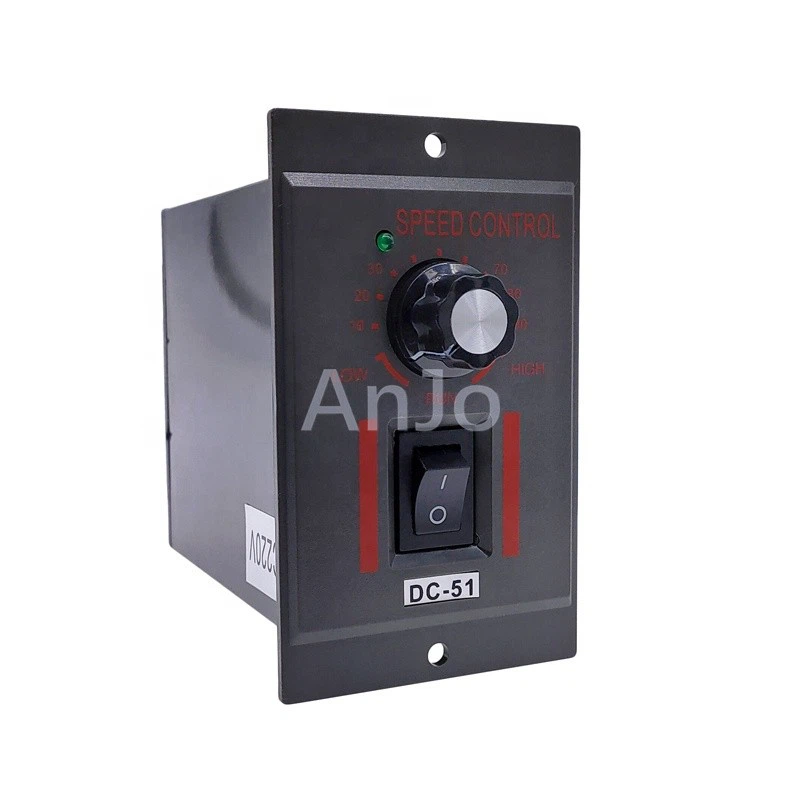


Product Characteristics
Precise and controllable speed regulation
Our DC motor controller can achieve continuous and stepless adjustment of the DC motor's speed by regulating the output voltage or PWM (Pulse Width Modulation) signal, adapting to speed requirements under different loads.
Equipped with direction switching function
Our DC motor controller has a built-in H-bridge circuit and other topological structures, which can realize the forward and reverse rotation of the motor by changing the current direction without the need for additional commutation devices.
Integrated load and fault protection
This controller integrates protection modules such as overcurrent, overvoltage, undervoltage, and stall protection. When the motor is abnormal, it automatically cuts off the output or limits the current to avoid equipment damage.
Product advantages
Fast response speed
The electrical signal commands of our DC motor controller can be instantly converted into changes in motor speed or direction, without the lag of mechanical speed control mechanisms, making it suitable for scenarios with high-frequency start-stop and speed changes.
High energy efficiency
When our controller adopts PWM modulation technology, the controller itself has low power consumption, and can dynamically adjust the output power according to load requirements, reducing energy waste.
Strong adaptability
Our controller can be matched with DC motors of different powers and types (such as brushed DC motors, brushless DC motors), and supports various control signal inputs such as manual knobs, PLCs, and single-chip microcomputers, meeting the needs of multiple fields such as industrial automation and smart homes.
Product Information
What Is DC Motor Controller?
A DC motor controller is an electronic device or circuit designed to regulate the operation of a direct current (DC) motor. It acts as a "bridge" between the power supply and the motor, managing key working parameters to ensure the motor runs safely and meets specific application requirements.
How it Works
DC motor controllers control the speed, torque, and direction of DC motors by regulating their voltage and current. They mainly use Pulse Width Modulation (PWM) to adjust the average voltage or H-bridge circuits to reverse the polarity for changing direction. PWM switches the power supply quickly and efficiently controls the speed by changing the "on" time (duty cycle), while the H-bridge uses four switches operating in a diagonal pattern to reverse the current flow, thereby changing the direction of rotation.
Types of AC Controllers
By Function/Method
• Pulse Width Modulation (PWM): Adjusts motor speed by varying the width of voltage pulses; highly efficient.
• H-Bridge: Uses switches (often transistors) to reverse current, controlling motor direction and enabling braking.
• Armature Control: Varies voltage to the armature to control speed, often using rheostats (variable resistors) or solid-state methods.
• Field Control: Changes current in the field windings to adjust motor speed.
• Linear Controllers: Provide smooth, continuous voltage for precise speed control but can be less efficient.
• PID Controllers: Proportional-Integral-Derivative controllers offer advanced, closed-loop control for precise setpoints.
By Motor Type
• Brushed DC Controllers: Manage simple motors with brushes, often using H-bridges or PWM.
• Brushless DC (BLDC) Controllers: More complex, managing electronic commutation for brushless motors, often using sensorless or sensored methods.
• Stepper Motor Controllers: Drive stepper motors in precise, incremental steps, often with integrated drivers
Typical Application Scenarios
• Automotive: Power windows, seats, fans, electric vehicles (EVs) for speed/torque control.
• Industrial Automation: Conveyor belts, elevators, robotic arms, hoists, machine tools, pumps, and processing equipment.
• Robotics: Precise joint movement in manipulators and complex automated systems.
• Consumer Goods: Vacuum cleaners, electric toothbrushes, drills, toys, drones, and home appliances.
• Material Handling: Cranes, hoists, forklifts, and other systems for lifting and moving materials.
• Smart Grids & Energy: EV charging, public lighting, and managing DC power distribution.
• Medical Devices: Pumps for medicine and other precise medical equipment.
Product photo


Product Description
|
BLDC motor controller |
|
|
Used for |
DC motor |
|
Power |
10W ~ 400W |
|
Driver Voltage |
12 ~ 48VDC |
|
Rated Current |
Avoid dust, oil, and corrosive gases. |
|
Working temperature |
-10 ~ + 50°C |
|
Storage temperature |
-20 ~ +120°C |
|
Highest environment humidity |
80% RH (No condensation) |
|
Cooling mode |
Natural cooling |
|
Place of origin |
China |
|
Brand |
ANG |
|
packaging |
wooden box or carton |
|
HS codes |
8537101190 |
|
Terminals |
Function |
|
|
Input |
SV |
1.External potentiometer; 2. Input analog signal; 3.PWM pulse width. |
|
COM |
Common port (0V reference level) |
|
|
F/R |
High level input the motor will rotates clockwise, low level input or when F/R and COM are connected, the motor will rotate anticlockwise |
|
|
EN |
High level input the motor will slowly stop, low level input or when EN and COM are connected, the motor runs |
|
|
BRK |
The motor brake stops when a high level is added or port suspension; the motor runs when the low level is added or EN and BRK are connected |
|
|
Output |
ALM |
The fault output signal of the motor or drive is 5V under normal circumstances; the level is 0V when a fault occurs. |
|
SPEED |
The output of speed is pulse frequency corresponding to the motor running. The terminal can be connected to the upper computer |
Product drawing

Eight reasons to choose us
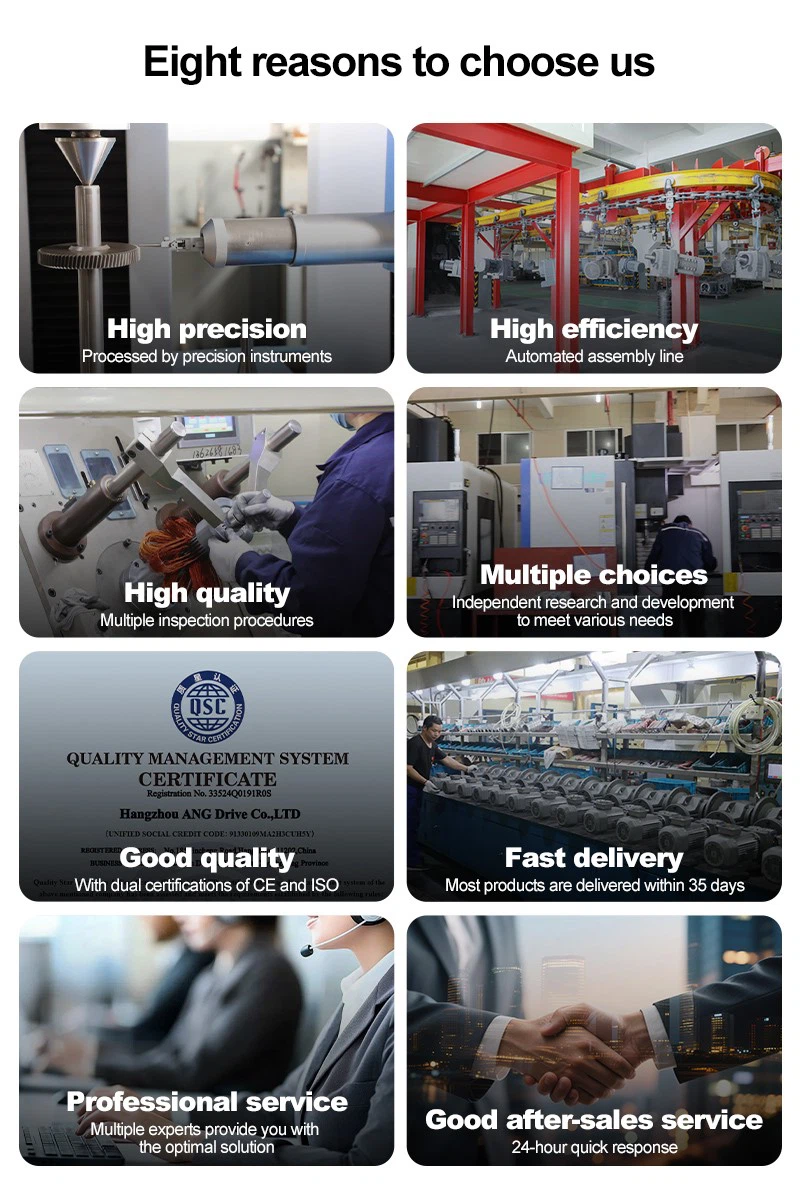
We have our own factory

Multiple certificate certifications

Customizationand selection Steps

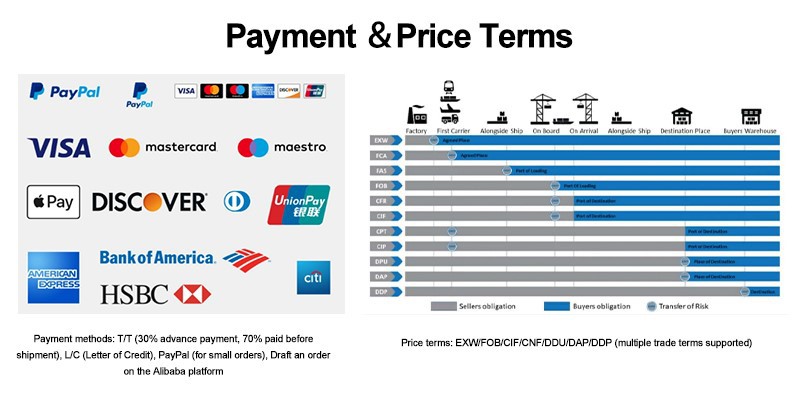
Payment and Price Terms
Production and testing

Packaging and transportation
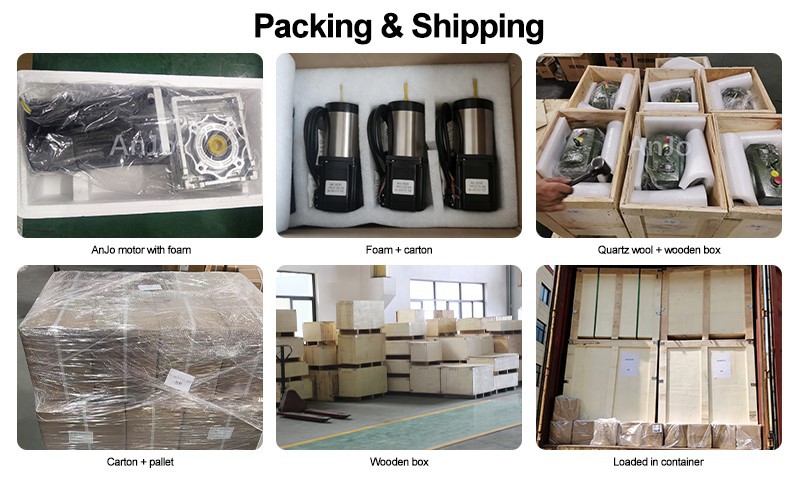

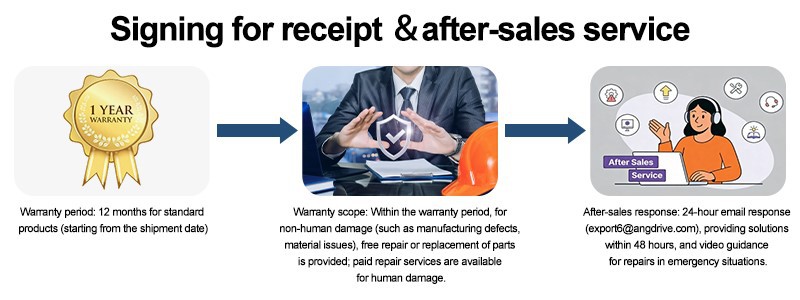
Signing for receipt and after-sales service
Hot Tags: bldc motor controller, China bldc motor controller manufacturers, suppliers, factory, Brushless Dc Controller, dc motor controller, Dc Variable Speed Controller, Bldc Motor Controller, Soft Start Dc Motor Controller, Dc Electric Motor Controller


